


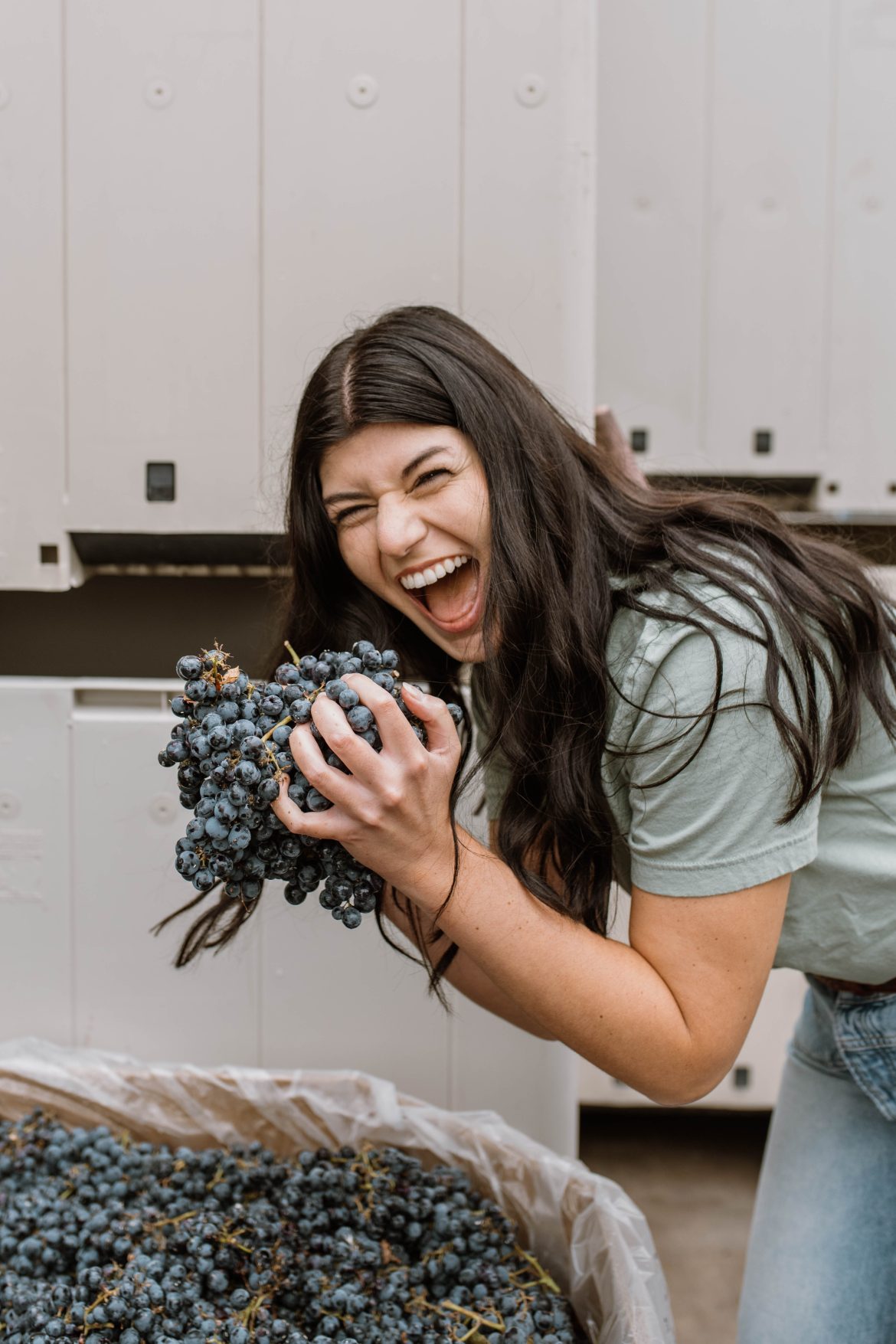
Luxury in wine is often associated with vineyard names, oak programs, and aging potential. What consumers rarely see is the operational discipline required to protect fruit before it ever reaches the crush pad.
At Cellar Beast, we source grapes from premier AVAs across Washington, Oregon, and California. That means our fruit travels nearly 2,500 miles before it is processed. For many, that distance sounds like risk. For us, it is a system built on precision. The difference between compromise and craftsmanship is logistics.
Harvest Is a Moving Target
We do not make picking decisions remotely. After years of working with our growers, we have established clear benchmarks for Brix, pH, phenolic ripeness, nitrogen levels, and overall vine balance. These numbers guide us, but harvest is never purely mathematical. There is still art involved.
Because our fruit will spend three to four days in refrigerated transit, we often make the pick call slightly earlier than ideal if we were crushing on site. The goal is not to pick at perfection. The goal is to have the fruit arrive at perfection.
That requires forecasting weather shifts, monitoring ripening curves, and staying in constant communication with vineyard managers. Occasionally, we must reject or delay a shipment if numbers are off. That is disruptive for everyone involved, including us. But protecting quality always outweighs convenience.
Engineering the Journey
Once harvested, the fruit moves quickly. We use team drivers running straight through to minimize transit time. Trucks are temperature-controlled to maintain cold chain integrity throughout the journey.
Over time, we have refined the system further. We incorporate venting pipes into shipping boxes to prevent heat buildup and spoilage during transit. At the vineyard, we apply a protective enzyme, B Nature, to help suppress wild yeast and unwanted bacterial activity before fermentation begins.
These are not dramatic measures. They are quiet, preventative safeguards.
Luxury is rarely loud. It is controlled.
When the fruit arrives at our Pennsylvania facility, it is processed immediately. No staging. No delays. The transition from truck to crush pad is choreographed because the integrity of the fruit depends on it.
Relationships Before Risk
The success of this model is rooted in relationships. Each year, our team travels west to walk the vineyards. We stand in Candy Mountain evaluating berry size and skin thickness. We walk the cobblestones of The Rocks District, discussing how Syrah responded to heat spikes. We review canopy management decisions on Red Mountain and talk nitrogen adjustments in Yakima.
Those conversations matter. When we ask a grower to pick three days earlier than instinct might suggest, that trust is already built. When weather forces a pivot, the communication lines are open. In 2022, an early frost in the Willamette Valley significantly affected our Pinot Noir sourcing. Rather than compromise quality, we shifted to Santa Maria, California. The decision required agility and long-standing relationships. It was not ideal. It was necessary.
Strategic sourcing is not about avoiding risk. It is about managing it with discipline.
The Business Case for Precision
From a leadership standpoint, cross-country fruit sourcing demands operational rigor. Harvest windows are narrow. Transportation schedules must align with fermentation tank availability. Labor planning must match truck arrival times. A single disruption can ripple across the entire production calendar.
But the payoff is control. By sourcing from distinct AVAs such as Candy Mountain, Red Mountain, The Rocks District, and select sites in California, we build a portfolio defined by site specificity rather than geographic convenience. We are not limited by local growing conditions. We select vineyards based on character and consistency. The logistical complexity is intentional. It allows us to deliver wines that express some of the most respected vineyard sites in the country, while maintaining the stylistic discipline that defines Cellar Beast.
Luxury Is a System
There is a misconception that luxury wine is about indulgence. In reality, it is about restraint and precision. It is about knowing when to pick early so the fruit arrives on time. It is about installing venting systems in shipping containers to protect clusters from unseen heat. It is about rejecting fruit when numbers are not aligned, even when schedules are tight. It is about building a supply chain as carefully as you build a blend.
At Cellar Beast, we do not view distance as a liability. We view it as a responsibility. If we choose to work with extraordinary vineyards thousands of miles away, then we must match that ambition with equal discipline.
Because in the end, luxury is not defined by how far fruit travels. It is defined by how carefully it is handled along the way.
Website: www.cellarbeastwine.com
Socials: @cellarbeastwinehouse
