


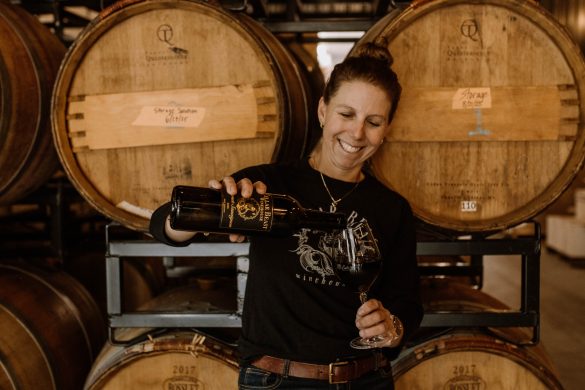
Most businesses buy inventory expecting to sell it relatively quickly. Wine has a very different clock.
When we purchase red grapes at harvest, we may not have a finished product to sell for another two or three years. During that time, we have already paid for fruit, transportation, labor, barrels, cellar space, bottles, and countless other expenses.
That makes premium winemaking an unusual exercise in forecasting. We are making decisions today about what we believe our customers will want years from now.
Planning Before the Grapes Arrive
At Cellar Beast Winehouse, production planning begins early each year, long before harvest. We map projected supply against anticipated demand across our wine club, tasting rooms, Private Reserve Program, commercial accounts, and planned areas of growth.
Some fruit is secured through longer-term vineyard relationships and contracts, while other volumes remain flexible, allowing us to respond to changing demand or opportunities. We study past performance and seasonality, but forecasting is never simply repeating what sold last year. We also have to consider where we expect the business to grow and through which channels.
Then we make commitments.
For premium red wines, the time from harvest to bottling typically takes 18 to 20 months. After bottling, our goal is at least another year of aging before release.
As a startup winery, we always intended to release wines when they were truly ready. In our first few years, business necessities sometimes pushed those timelines. Today, our inventory and production cycles allow us to follow the aging program we originally envisioned.
That patience has a cost.
Financing Something You Cannot Sell
Wine inventory is capital sitting quietly in barrels and bottles. Grapes must be paid for at harvest. Employees, barrels, storage, utilities, and packaging all need to be paid for, even when the product that generates those expenses may still be years away from generating revenue.
For a growing winery, that creates a constant conflict. Releasing wine earlier improves cash flow. Holding it longer may produce the better wine. We have increasingly chosen patience.
Early in our business, production skewed more heavily toward white wines, which generally provided a shorter path from harvest to release. Today, our portfolio has transitioned primarily toward reds, with wines given the time we believe they need before reaching customers. That means carrying significantly more inventory. We have generally erred on the side of having more wine aging rather than less, to the point that continued growth may require additional space to allow those wines to mature properly.
Experiment Without Gambling the Vintage
Long production cycles also complicate innovation. If an experiment fails, you may not fully understand the consequences for months or years.
Our solution is controlled experimentation.
We frequently divide fruit from the same source among multiple fermenters, using proven yeast and malolactic strains for the majority while experimenting with new strains or techniques on a smaller portion.
The same philosophy applies to vineyard sourcing. New sources typically enter our program in limited quantities. Our winemaking team evaluates how those wines develop. If the quality is there, we may increase our commitment in the following harvest.
The challenge is timing. By the next harvest, we may have less than a year of information about how the previous vintage is developing. Once again, we are making tomorrow’s decision before today’s answer is complete.
For certain premium labels, however, quality is non-negotiable. If only a small portion of a vintage meets the standard, we will release an extremely small batch rather than increase production to satisfy a forecast.
Growth Is Not Always More
Perhaps the most important lesson we have learned is that growth does not necessarily mean producing more wine.
We are approaching a production level that gives us the quality fruit, vineyard relationships, and capacity to support our current business and potentially another location or two. We do not intend to dramatically increase production simply because we can.
The objective is sustainable growth without compromising what made the wine worth growing around in the first place.
Wine teaches patience in an unusually tangible way. Every harvest involves investing in something whose final outcome lies years in the future.
You forecast. You experiment. You adjust. You wait. And eventually, someone opens the bottle.
By then, the decisions that shaped what they taste may have been made years before they ever knew that bottle existed.
Email: info@cellarbeastwine.com
Website: www.cellarbeastwine.com
Socials: @cellarbeastwine
