


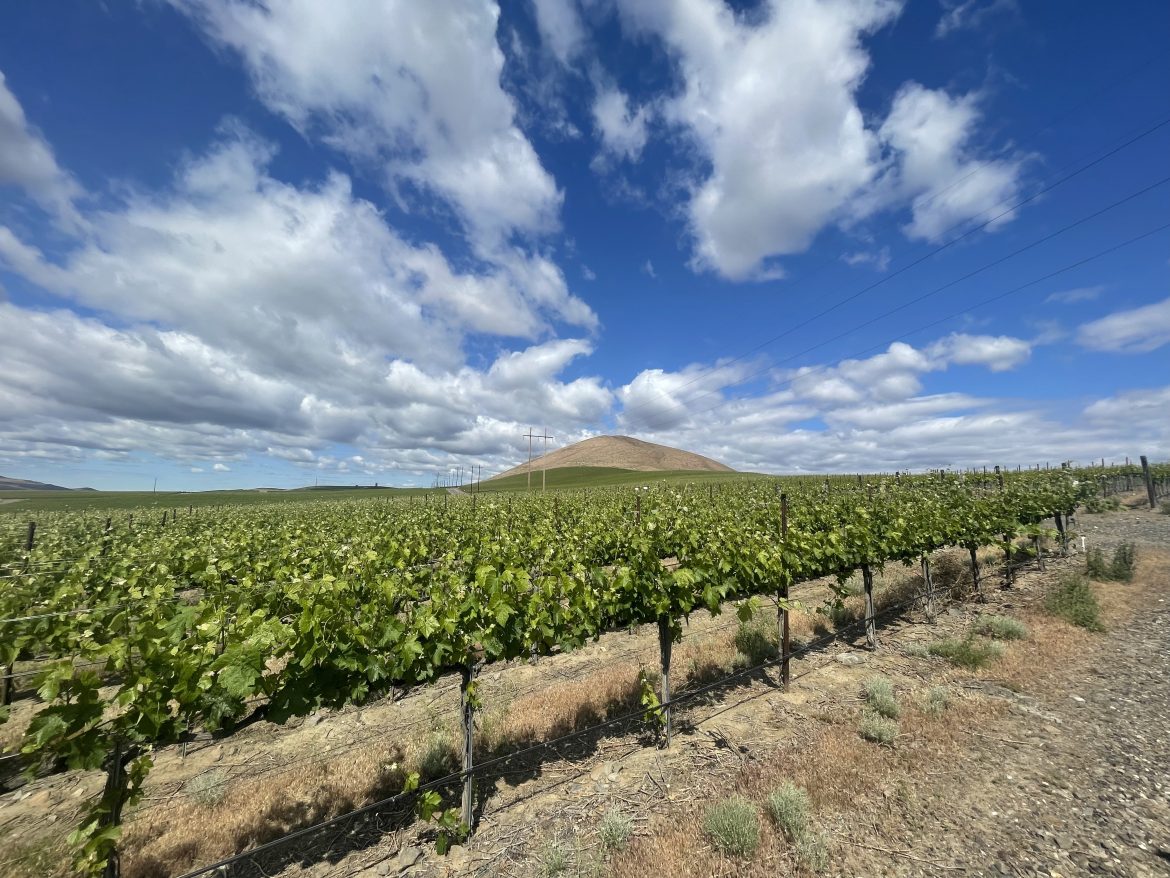
There is something distinct about standing on Candy Mountain at sunrise.
The air feels sharper. The wind moves differently across the slopes. When you walk the rows, you sense the tension in the fruit – the kind of concentration that only comes from a site that demands resilience from the vines.
At Cellar Beast, we believe great wine begins long before fermentation. It starts in the vineyard: in the soil, in pruning decisions, and in the conversations growers and winemakers have about yield, irrigation, and timing. That belief is why our team travels to Washington each year. We walk the vineyards. We meet with our growers. We taste berries and discuss the season, looking not just at the current harvest, but at the long-term trajectory of each site.
Candy Mountain AVA has become one of the places that consistently commands our attention.
Why Micro AVAs Matter
Candy Mountain is one of Washington’s smallest AVAs, situated beside Red Mountain but defined by its own character. Its south-facing slopes, nutrient-poor soils, and intense sun exposure produce fruit with remarkable structure and concentration. Berries tend to be smaller, skins thicker, and tannins more defined.
For decades, consumers primarily recognized broad regions. Today, many are seeking greater precision. They want to know not only the varietal or state, but the specific origin of the wine in their glass. Micro AVAs offer that level of identity and site expression.
For Cellar Beast, sourcing from Candy Mountain has never been about prestige for its own sake. It has always been about character.
We have worked with Cabernet Sauvignon and Malbec from the site for several years. These wines consistently show depth, dark fruit concentration, and a mineral backbone that brings structure and longevity. In the 2025 harvest, we expanded our commitment, sourcing Grenache and Mourvèdre as well. Rhône varieties grown in this environment develop a compelling balance of fruit and savory structure, adding complexity and tension to our blends.
Relationships Before Contracts
Success in micro-AVA sourcing depends on more than site selection. It depends on relationships.
Each year, our team travels west not simply as buyers, but as partners. We spend time at Pontin del Roza, visit Shaw’s vineyards on Red Mountain, and walk through The Rocks District, where cobblestone soils shape Syrah with unmistakable savory depth.
On Candy Mountain, our visits go beyond evaluating clusters. We discuss canopy management, water stress, heat spikes, and long-term vineyard strategy. We review what worked and what can be refined. These conversations build trust and alignment, which ultimately influence quality in the vineyard and consistency in the winery.
For me, that alignment is essential. When growers know we respect their land and their craft, they invest in the relationship just as deeply. That mutual commitment is reflected in the fruit and, ultimately, in the wine.
The Business Case for Small
From a business perspective, micro AVAs are both strategic and demanding. Production is limited. Yields are often lower. Fruit costs are higher.
But differentiation has become increasingly important. Consumers are more informed and more curious. They want authenticity, transparency, and a clear sense of place. Micro AVAs allow wineries to tell a deeper story – one rooted in geography, intention, and collaboration.
Candy Mountain fruit brings structure and focus to our cellar. It shapes our Cabernet-based wines, sharpens Rhône blends, and adds dimension to our portfolio. More broadly, it reflects a shift in the industry toward site-driven winemaking.
Walking Toward the Future
Every visit to these vineyards is a reminder that wine is both agricultural and relational. It is defined by soil and sun, but also by trust and shared vision.
Micro AVAs like Candy Mountain represent the future of premium wine: smaller sites, greater precision, and stronger partnerships between growers and producers. For Cellar Beast, they also represent a commitment to pursue excellence at its source.
Standing on Candy Mountain at sunrise makes that clear. Prestige is not about scale. It is about intention. And intention is what transforms a vineyard into something unforgettable.
